
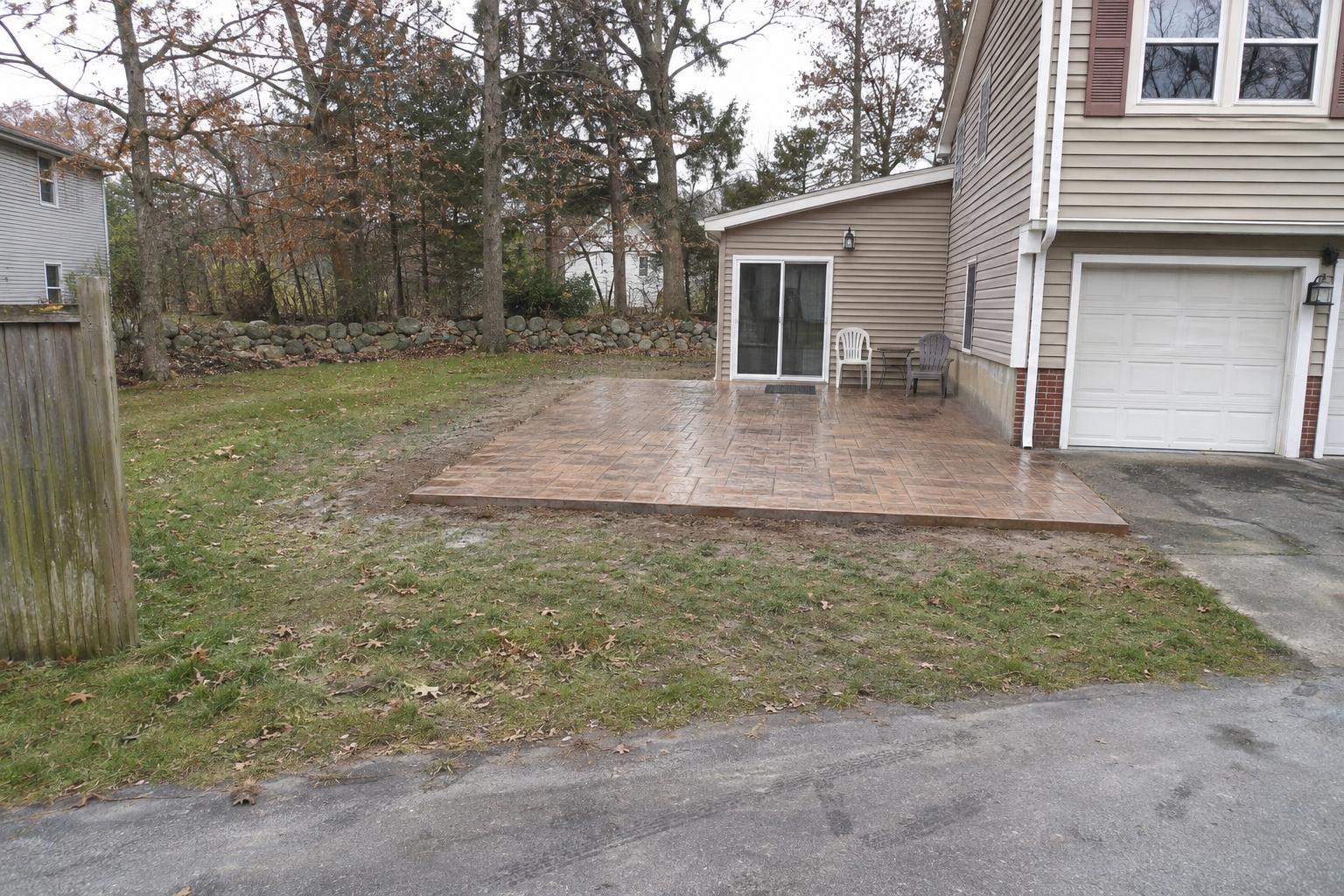
Concrete work looks simple from the sidewalk. Pour it, smooth it, let it sit. What you can't see is the four inches of compacted gravel underneath, the depth of the footing, whether the mix has air entrainment for our winters, and where the control joints went in. Those are the things that decide if your driveway is still flat in eight years or cracked and heaving by the second winter. Here's what actually separates a contractor worth hiring from one you should pass on.
Why Lynn's ground and weather matter here
A lot of Lynn, especially down toward the harbor and in the flatter sections near the Lynnway, sits on fill and marshy soil that was built up over the last century. Other parts, closer to the Highlands and up toward Lynn Woods, have more ledge and clay-heavy soil that doesn't drain fast. Both conditions move. Clay swells when it's wet and shrinks when it dries out, and that movement under a slab is what causes the stair-step cracking you see on older driveways and walkways around town.
Then there's the winter. Massachusetts typically sees somewhere around 30 to 40 freeze-thaw cycles a season, and the road salt that keeps your driveway passable in February is brutal on concrete that isn't mixed right. Concrete poured without air entrainment, those microscopic air bubbles that give water room to expand when it freezes, will start flaking and scaling at the surface within a few winters. Footings also need to go below the frost line, which in this part of Massachusetts is generally 42 to 48 inches. A contractor who pours a footing at 24 inches because it's faster is setting up a problem that shows up as a cracked step or a leaning retaining wall three or four years down the road.
Ask about the base, not just the finish
Anyone can make fresh concrete look good for the first photo. What holds it up is underneath. For a driveway or patio slab, you want at least 4 inches of crushed stone base, compacted in lifts, not just dumped and leveled. On soft or wet sections of a lot, that base sometimes needs to go deeper, especially near Lynn's low-lying streets where water doesn't drain away on its own. Ask what base depth they're using and why. If the answer is a shrug, that's your answer.
Ask about reinforcement too. Wire mesh is still common and fine for a lot of residential slabs, but it has a habit of sinking to the bottom of the pour if nobody pulls it up as they go, which means it's doing nothing. Rebar on chairs, spaced correctly, holds its position and gives a slab more to work with when the ground underneath shifts. For a driveway that's going to carry a car and plow traffic, that difference matters.
What a real bid looks like
A one-page estimate with a total price and nothing else isn't a bid, it's a guess. A written proposal should spell out the thickness of the slab, usually 4 inches for a patio or walkway and closer to 5 or 6 for a driveway that'll see a vehicle, the base material and depth, whether it's mesh or rebar, the PSI strength of the mix (3,000 to 4,000 PSI is standard for residential work around here), and where the control joints go. Joints should be cut roughly every 8 to 10 feet, within the first 24 hours after the pour, before the concrete decides on its own where it's going to crack. If a contractor skips that step or cuts joints too far apart, you'll get random cracking that no amount of sealant fixes later.
Timeline matters too. A driveway slab typically needs 24 to 48 hours before you can walk on it and about 7 days before light vehicle traffic, with full cure strength around 28 days. Anyone telling you to drive on it the next day either doesn't know better or doesn't care.
Permits, and why they're not optional here
Lynn's building department requires a permit for new slabs, foundation work, and retaining walls over a certain height, and a driveway apron that crosses the sidewalk or public way usually needs sign-off from the DPW as well, since you're working on city property at that point. Older streets in neighborhoods like the Diamond District or West Lynn often have shallow utility lines and sewer connections that weren't mapped the way newer subdivisions are, so a Dig Safe call before any excavation isn't a formality, it's how you avoid hitting a gas line. A contractor who tells you permits aren't necessary, or offers to skip the inspection to save time, is telling you they've done this before and gotten away with it. That's not a selling point.
Red flags worth walking away from
- No proof of insurance. Ask for the certificate directly from the insurer, not a scanned copy that could be years old.
- A price that's way under everyone else's. Concrete, gravel, and labor cost what they cost. A number that's 30 percent lower usually means a thinner slab, no rebar, or a plan to skip the permit.
- Pressure to sign and pay in full before work starts. A deposit is normal. Paying the whole job upfront is not.
- No local references or completed work you can actually go look at. Stamped concrete and retaining walls especially should be something you can drive by and see two winters later, not just a photo on a phone.
- Vague answers about cure time, joint spacing, or base depth. If they can't explain it in plain terms, they probably aren't thinking about it on your job either.
What good work actually looks like
A contractor who's done this a while will walk your lot before quoting, check which way water runs off the roof and across the yard, and grade the slab away from the house, usually about a quarter inch of fall per foot, so you're not pushing water toward your foundation. They'll talk about weather before they talk about scheduling, because pouring concrete in July heat means watching the cure so it doesn't flash-set, and pouring in November means covering it and maybe using an accelerator so it doesn't freeze before it sets up. They'll tell you what they won't do, too, like pour over old cracked concrete without breaking it up first, or set a slab without a drainage plan just because that's what you asked for.
If you're getting quotes for any of this, whether it's a new driveway, a patio, steps, or a foundation repair, ask the same handful of questions of every contractor and see who actually answers them. You can see the kind of work and detail we put into our concrete contractor work around Lynn and the surrounding towns, and we're glad to walk a property and explain exactly what a job would involve before any money changes hands.